


Table of Contents
- Understanding Deck Building Costs in Nebraska
- Key Factors Influencing Deck Costs
- Material Options and Their Cost Implications
- Practical Budgeting and Hidden Expenses
- Advanced Custom Features and Cost Add-Ons
- Frequently Asked Deck Cost Questions
- Making Informed Deck Investment Decisions
Understanding Deck Building Costs in Nebraska
Transforming your backyard into a vibrant outdoor living space can create lasting memories for your family, whether hosting barbecues in Omaha or relaxing under Nebraska’s wide skies. At Big Pine Decks, we understand that starting a deck project often begins with one key question: what is the average cost to build a deck in Nebraska? This guide helps you navigate these expenses with confidence.
Nebraska’s climate, with its harsh winters and freeze-thaw cycles, significantly impacts deck construction expenses in the Midwest. Homeowners in areas like Bellevue and Papillion must account for frost-resistant foundations, such as our 42+ inch deep footings, to ensure durability and code compliance. Overall, the cost to build a deck in Nebraska typically ranges from $15 to $50 per square foot, influenced by materials, size, and features. For instance, a basic 300-square-foot cedar deck in Omaha might total around $7,500 to $13,500, while premium composite options push toward the higher end due to their low-maintenance appeal. Labor rates in Nebraska average higher than national figures because of specialized skills needed for regional weather challenges, and using a deck cost calculator can provide a quick preliminary estimate for your project.
Several variables affect these figures, including material choices like affordable cedar versus durable composites, where composite deck cost often justifies the investment through longevity and reduced upkeep. Local availability of supplies and labor shortages in growing communities also play a role, making accurate assessments essential.
| Factor | Impact on Cost | Nebraska-Specific Notes |
|---|---|---|
| Larger decks increase material and labor needs | $10–$30/sq ft (Scales with square footage) | Frost line requires deeper foundations; Adding 10–20% in Omaha |
| Materials | $5–$50/sq ft (Wood vs composite) | Local availability impacts pricing; TimberTech composites common |
This table illustrates typical ranges based on our experience with Nebraska projects, helping you anticipate budgeting for outdoor living space needs. We recommend a free onsite consultation to tailor these estimates to your property and avoid surprises from hidden costs like permitting.
As a family-owned company with over 40 years of licensed and insured expertise, we at Big Pine Decks specialize in custom decks that withstand local conditions while enhancing your home’s value. Our free deck quote free estimate in Omaha ensures transparent pricing without obligation.
In the following sections, we’ll dive deeper into key factors, material comparisons, and smart budgeting tips to guide your deck journey from vision to reality.
Key Factors Influencing Deck Costs
When considering the cost to build a deck in Nebraska, homeowners often wonder what drives the final price tag. We at Big Pine Decks see size, materials, labor, site preparation, permitting, and local climate as the main deck pricing variables. These construction expense drivers can vary widely, but understanding them helps you plan a budget that fits your outdoor living goals in areas like Omaha and Papillion. For instance, a basic 200 square foot deck might start at around $10,000 to $15,000, but choices in each factor can adjust that significantly.
One of the biggest influences is deck size. Larger decks naturally require more materials and labor, scaling costs from about $10 to $30 per square foot. For a standard 200 square foot setup, we recommend starting with this baseline to get a realistic estimate. In Nebraska, where frost lines demand deeper foundations, even small decks in the Omaha area can see an added 10 to 20 percent due to extra excavation and concrete work. This ensures stability against freeze-thaw cycles, a common issue here.
Materials play a huge role in upfront and ongoing expenses. Traditional cedar offers a warm, natural look at lower initial costs, around $5 to $20 per square foot, while composite options run $20 to $50 per square foot for their durability and low maintenance. According to Consumer Reports’ decking buying guide, composites like TimberTech resist mildew and fading better in humid Midwest summers, reducing long-term replacement needs. We often guide clients toward these for Omaha’s variable weather, balancing the composite deck cost with years of hassle-free enjoyment.
To help estimate your project, tools like a deck cost calculator can factor in these material choices alongside size. Here’s a quick comparison of core cost influencers tailored to Nebraska decks:
| Material Type | Cost per Sq Ft | Maintenance | Lifespan in Nebraska Climate |
|---|---|---|---|
| Pressure-Treated Wood | $5–$15 | Annual sealing needed | 10–15 years (Susceptible to rot) |
| Cedar | $10–$25 | Periodic staining | 15–25 years (Better resistance) |
| Composite (TimberTech) | $30–$50 | Minimal cleaning | 25+ years (Frost and UV resistant) |
This table highlights how these elements interact—for example, opting for professional labor can offset higher material costs through faster, error-free installation. We find that skipping site prep shortcuts often leads to costly repairs later, especially with Nebraska’s clay-heavy soils prone to shifting.
Labor rates in Nebraska typically range from $40 to $80 per hour, influenced by the complexity of the build. In the Omaha Metro, as noted on our local builders’ resources, experienced teams like ours complete framing and installation efficiently, using treated LVL for strength without inflating hours. Site preparation, including grading for proper drainage, can tack on 15 to 25 percent but prevents water pooling issues common in our rainy springs.
Permitting fees run $200 to $500 locally, covering inspections for safety and code adherence. Nebraska’s 42-inch frost depth means foundations must go deeper, boosting foundation expenses by up to 20 percent compared to milder climates. We handle these seamlessly, incorporating deep footings from the start to avoid frost heave.
At Big Pine Decks, our family-owned approach minimizes these drivers through smart planning and free onsite consultations. Serving all of Omaha and surrounding areas, we offer custom designs with composite installation or cedar builds, plus accessories like drainage solutions. By choosing pros like us, you save on long-term maintenance—think 25-year warranties on quality materials—while ensuring a code-compliant deck that enhances your home for years. Ready to explore? Contact us for your free estimate and let’s build something lasting.
Material Options and Their Cost Implications
When considering the cost to build a deck in Nebraska, material choices play a pivotal role in balancing upfront expenses with long-term value. As family-owned deck builders with over 40 years of experience, we at Big Pine Decks specialize in guiding homeowners through these decisions, focusing on options that withstand our region’s harsh freeze-thaw cycles and variable weather. Whether you’re exploring a decking buying guide for insights or using a deck cost calculator to estimate your project, understanding the material expense analysis helps create a durable outdoor space tailored to Omaha-area homes.
Composite Decking: Durability vs Upfront Investment
Composite decking stands out for Nebraska homeowners seeking low-maintenance solutions that endure our Midwest climate. Materials like TimberTech, which we frequently install, blend wood fibers and recycled plastics to mimic natural wood while resisting moisture, UV rays, and frost damage. The composite deck cost typically ranges from $30 to $50 per square foot, reflecting the premium for engineered durability that outlasts traditional woods.
This upfront investment pays off through lifecycle savings. Unlike wood options prone to warping or rot in Nebraska’s wet springs and dry summers, composites require only occasional cleaning with soap and water, eliminating annual staining or sealing. According to durability ratings from trusted sources, TimberTech products maintain their appearance and structural integrity for 25 years or more, often backed by manufacturer warranties that align with our code-compliant installations. For instance, in Bellevue projects we’ve completed, homeowners report avoiding replacement costs that could add thousands over a decade.
We recommend composites for families prioritizing ease and longevity, especially when integrating accessories like drainage solutions to prevent water pooling. A simple deck cost calculator might show an initial higher outlay, but the decking investment breakdown reveals reduced maintenance—potentially saving $500 to $1,000 yearly on labor and materials compared to wood alternatives. Our free estimates help quantify this for your specific site, ensuring the build enhances your home without ongoing hassles.
The following table outlines a material cost comparison for Nebraska decks, highlighting how composites excel in longevity:
| Expense Type | Typical Cost | Avoidance Tip from Big Pine |
|---|---|---|
| Permits | $200–$500 | We handle compliance; included in estimate |
| Drainage Solutions | $500–$2,000 | Integrated early; reduces water damage |
| Lighting Accessories | $300–$1,500 | Custom design; enhances usability |
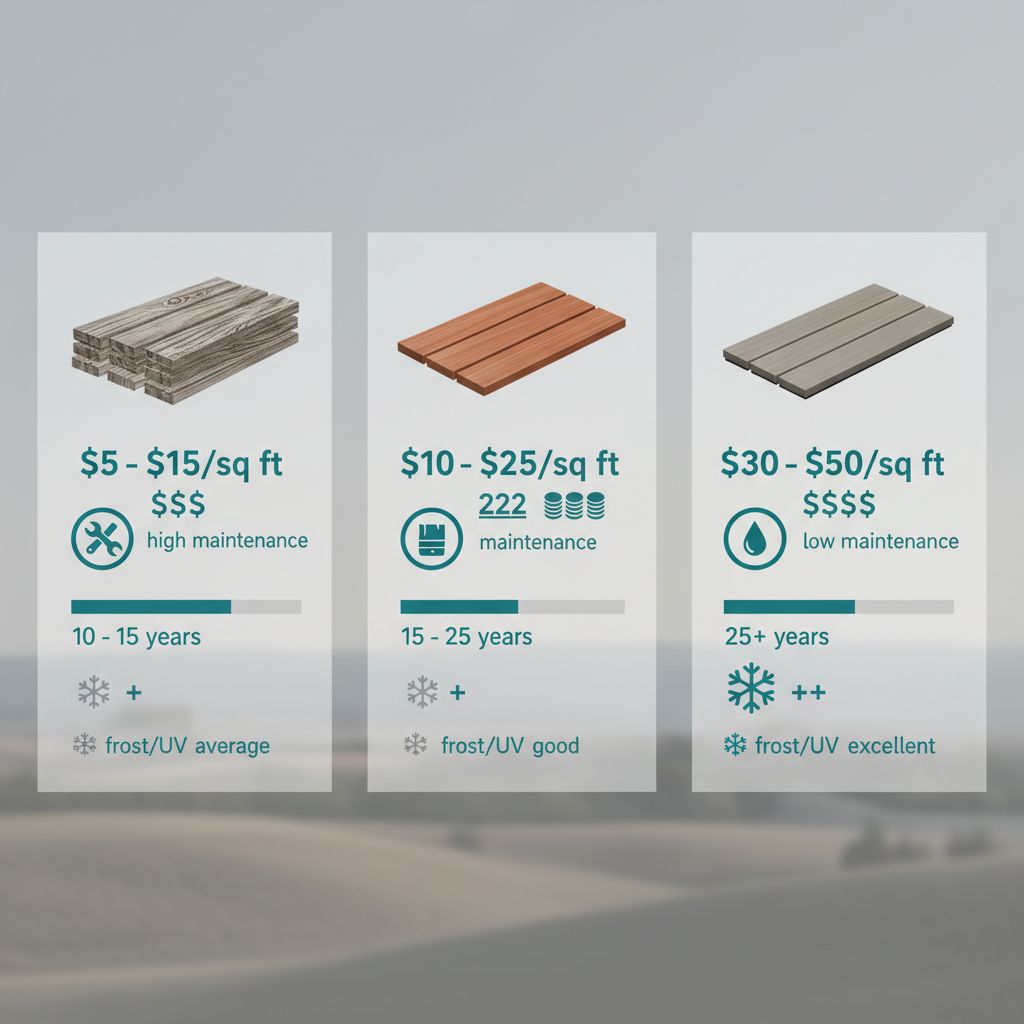
Comparison of deck material options, costs, and longevity for durable outdoor spaces
Building on these insights, let’s explore how composites integrate seamlessly with custom designs, such as LED lighting or drink rails, further justifying the expense through enhanced usability.
Cedar and Wood Alternatives: Budget-Friendly Choices
For those drawn to the warm, natural appeal of wood, cedar offers a compelling budget-friendly alternative in Nebraska’s climate. As experienced residential deck builders, we appreciate cedar’s rich grain and subtle aroma, which add rustic charm to backyards in areas like Bellevue and La Vista. Priced at $10 to $25 per square foot, it’s more affordable than composites, making it ideal for cost-conscious families starting their decking investment breakdown.
However, cedar requires more upkeep than synthetics, including periodic staining every two to three years to protect against sun fading and moisture absorption during our humid summers. In local projects, we’ve seen cedar decks thrive for 15 to 25 years when properly maintained, offering better natural resistance to insects and decay than pressure-treated wood. Treated options, often using LVL for framing, start at $5 to $15 per square foot but demand annual sealing to fend off rot in freeze-thaw conditions, potentially leading to earlier replacements.
Comparing these woods reveals trade-offs in maintenance and aesthetics. Cedar’s oils provide inherent protection, reducing the need for chemical treatments compared to pressure-treated lumber, which can splinter or warp without diligent care. We guide clients through site evaluations to choose based on exposure—cedar excels in shaded spots, while treated wood suits budget builds with added drainage. Drawing from our portfolio, a Papillion cedar deck we built last year saved owners on initial costs while delivering a timeless look, though they budget for staining to maintain its vibrancy.
To illustrate these differences, here’s a targeted comparison of cedar versus pressure-treated wood alternatives for Nebraska decks:
| Feature | Cost Range | Value in Nebraska |
|---|---|---|
| Drink Rails | $20–$40/linear ft | Enhances entertaining; weather-resistant |
| Integrated Lighting | $300–$1,000 | Extends usability; code-compliant LED |
| Retaining Walls | $50–$100/linear ft | Site stabilization; local frost protection |
This table highlights cedar’s edge in durability without the premium of composites, aligning with our commitment to code-compliant builds that serve all of Omaha and surrounding areas. While a deck cost calculator might favor wood for smaller projects, the total ownership costs—even with maintenance—remain lower than frequent rebuilds. We often pair cedar with accessories like post-cap lights for evening enjoyment, ensuring functionality matches the budget. Ultimately, selecting cedar or treated wood allows homeowners to achieve a beautiful, inviting space while managing expenses effectively in our local climate.
Practical Budgeting and Hidden Expenses
Planning the cost to build a deck in Nebraska requires careful thought to avoid surprises that can strain your budget. We at Big Pine Decks, as a family-owned team with over 40 years of experience serving Omaha and surrounding areas, know that effective budgeting starts with reliable tools and an understanding of potential add-ons. By breaking down essentials and hidden fees, you can create a realistic financial plan for your outdoor project, whether in Lincoln or western Iowa. Our free estimates help homeowners allocate funds wisely, focusing on durable materials like composite decking that offer long-term value.
Using Tools for Accurate Estimates
Getting an accurate picture of your deck project begins with the right estimation methods. A deck cost calculator can provide a quick starting point, allowing you to input details like size, materials, and location to generate preliminary figures. For Nebraska builds, these tools factor in regional elements such as frost-resistant footings and local material prices, giving an initial range of $25 to $45 per square foot based on our project averages. However, while convenient, online calculators offer general insights and may overlook site-specific challenges like soil conditions in Omaha’s varied terrain.
For more precision, we recommend combining digital tools with professional consultations. Our free onsite estimates involve a thorough property assessment, discussing your vision and selecting options like cedar or composite decking. This approach reveals potential savings of 10 to 20 percent on hidden items, as noted in our deck quote process. Homeowners often find that manual walkthroughs uncover details a basic calculator misses, such as the need for deeper 42-inch footings to combat freeze-thaw cycles.
To illustrate the differences, consider this comparison between automated and hands-on estimation methods:
| Method | Accuracy | Key Benefits |
|---|---|---|
| Online Calculator | Baseline Only | Instant preliminary ranges |
| Professional Estimate | High (Onsite) | Identifies site-specific needs like drainage |
This table highlights why we always suggest starting with a calculator for a baseline, then refining with our free estimate. By using these expense planning tools, you ensure your budget aligns with real-world costs, avoiding the pitfalls of overly optimistic DIY guesses.
Unforeseen Costs: Drainage, Lighting, and Permits
Even the best-laid plans can encounter overlooked project fees that inflate your total. In Nebraska deck builds, permitting is a prime example—essential for structures over 30 inches high to comply with local codes in Omaha or Papillion. These fees, typically $200 to $500, cover inspections and ensure safety against the region’s harsh winters and heavy rains. Without proper planning, skipping this step risks fines or rework, but we integrate it seamlessly into our process to keep things hassle-free.
Drainage solutions often emerge as a hidden necessity, especially on sloped sites common in western Iowa. Poor water management can lead to pooling, erosion, or even structural damage over time, adding $500 to $2,000 if addressed reactively. We prioritize integrated drainage from the design phase, using channels and grading to direct runoff away from your deck foundation. This proactive step not only protects your investment but also enhances longevity, drawing from real project examples where early inclusion prevented costly repairs.
Lighting integrations, while optional, can transform your deck into a versatile evening space but come with their own composite deck cost considerations. Riser or post-cap lights, for instance, range from $300 to $1,500 depending on the scope and LED quality. These add-ons boost usability for family gatherings, yet they require wiring compliant with local electrical codes. Our custom designs ensure these features fit your budget without compromising aesthetics or safety.
The following table breaks down these hidden costs versus budgeted essentials, based on our Big Pine project averages and local permitting data:
| Potential “Hidden” Cost | Estimated Price | Budget Allocation Tip |
|---|---|---|
| Local Permitting | $200–$500 | Essential for code compliance |
| Integrated Drainage | $500–$2,000 | Allocate 15% for site prep |
| Step/Post Lighting | $300–$1,500 | Ideal for evening usability |
As this comparison shows, what starts as a surprise can become a budgeted strength with upfront planning. For instance, our consultations often reveal how combining drainage with lighting can optimize costs, saving on separate installations. To mitigate these, follow this budgeting framework: allocate 40 percent to materials like durable composites, 30 percent to labor, 20 percent to site preparation including drainage, and 10 percent for extras like permits and accessories. Contrasting DIY approaches, where homeowners might save initially but face 20-30 percent overruns from errors, hiring pros like us ensures transparency and value.
We always uncover these hidden costs early through our detailed planning, empowering you to enjoy a worry-free build. By focusing on averages rather than guarantees, and leveraging our free estimates, families in Bellevue or Council Bluffs can confidently invest in outdoor spaces that last.
Advanced Custom Features and Cost Add-Ons
We love helping homeowners in Nebraska elevate their outdoor spaces with thoughtful add-ons that make everyday living more enjoyable. When considering the cost to build a deck in Nebraska, these premium upgrades can add excitement without breaking the bank. From practical enhancements to stylish touches, our custom features integrate seamlessly, especially in areas like Omaha and Papillion where variable weather demands durable solutions. Let’s explore how these options boost functionality and value for your project.
Start with drink rails, a simple yet effective addition that provides a convenient ledge for beverages during gatherings. Priced at $20 to $40 per linear foot, they enhance entertaining on decks of any size. We often recommend them for family barbecues, pairing well with our composite deck installations to keep surfaces clear and clean.
Next, integrated lighting takes evenings outdoors year-round. Options like riser lights or post-cap fixtures start around $300 and can reach $1,000 depending on scope, using low-voltage systems for safety and code compliance in Bellevue. These illuminate stairs and edges beautifully, extending usability into the night while adhering to local regulations as highlighted in our installation projects.
Choosing the right add-ons depends on your lifestyle and site needs—think about evening use for lights or sloped terrain for stability. The following table breaks down key custom features, drawing from our project data in the region:
| Feature | Price Range | Local Value Add |
|---|---|---|
| Drink Rails | $20–$40/ft | Best for Omaha social spaces |
| LED Deck Lighting | $300–$1,000 | Safety and ambiance for night use |
| Drainage Solutions | $500+ | Prevents moisture buildup in Midwest |
This breakdown shows how each feature justifies its investment through practical benefits. For instance, retaining walls, often starting at $50 per linear foot, provide essential site stabilization on sloped yards common around Lincoln. Through our GBR Exteriors partnership, we incorporate green canvas concrete foundations that resist frost heave, reducing long-term maintenance costs by up to 80% compared to standard mixes, as per industry insights. This material’s shrinkage-compensating properties ensure lasting integrity in Nebraska’s freeze-thaw cycles.
Drainage enhancements, around $500 or more, prevent water pooling and extend deck life, while patios or driveways as extensions offer versatile expansions. Using a deck cost calculator helps estimate these, factoring in composite deck cost for premium materials. Overall, our custom designs optimize budgets by focusing on high-ROI elements, delivering low-maintenance joy tailored to your home in western Iowa or nearby communities. We provide free estimates to align these with your vision.
Frequently Asked Deck Cost Questions
Homeowners in the Omaha area often have common pricing queries about the cost to build a deck in Nebraska. We at Big Pine Decks, a family-owned company with over 40 years of experience, frequently address these estimate FAQs to help you plan your outdoor space effectively.
What are the main factors influencing deck costs in Nebraska?
Materials like cedar or composite, labor from skilled builders, and site preparation such as grading or access challenges all play key roles. Local climate considerations add to expenses for durable, code-compliant builds.
How much does it cost to build a 200 sq ft deck?
For a basic 200 sq ft deck, expect $3,000 to $10,000, depending on materials and features. Use a deck cost calculator to input your specifics for a tailored estimate during our free consultation.
What is the composite deck cost for a standard project?
Composite decking starts at $6,000 and up for premium, low-maintenance options ideal for Omaha’s weather. It resists fading and moisture, offering long-term value over traditional wood.
Is it cheaper to build a deck yourself or hire professionals in Omaha?
While DIY might save upfront, hiring pros like our team avoids costly errors and ensures code compliance with deep footings. We save you time and money long-term through quality craftsmanship.
What is the average cost per square foot for decks in Nebraska?
Nebraska decks typically range from $20 to $40 per square foot, factoring in local materials and labor. Our backyard projects reflect this, with free estimates for accurate local pricing.
What hidden costs should I watch for?
Permits and drainage solutions are common extras. We handle these seamlessly in our process to prevent surprises.
Making Informed Deck Investment Decisions
When evaluating the cost to build a deck in Nebraska, consider averages from $7,500 to $16,000 for 200-300 square feet, factoring in materials like composites, size, and local codes. Tools such as a deck cost calculator provide initial estimates, while composite deck cost varies based on durability and low maintenance.
Opting for professional installation over DIY ensures code-compliant builds with deep footings to withstand harsh winters, offering long-lasting value. As a family-owned team with over 40 years of experience, we at Big Pine Decks specialize in custom designs using premium materials for your outdoor oasis.
Contact us today for a free estimate in Omaha or surrounding areas. Let’s transform your vision into a reliable investment that enhances your home for years to come.
Resources
- Get Free Custom Deck Building Estimates in Omaha
- Find Licensed Custom Deck Builders in Omaha Metro
- Discover Green Canvas Concrete for Durable Deck Foundations
- Obtain Professional Deck Installation Services in Bellevue
- Hire Expert Residential Deck Builders in Omaha Area
- Build Low-Maintenance Backyard Decks in Omaha Nebraska
- Choose Licensed Insured Deck Contractors for Omaha Projects
- Explore Consumer Reports Guide to Decking Materials