
Composite & Wolf PVC Deck Builder in Omaha, NE
Big Pine Decks designs low-maintenance decks across the Omaha metro, with Wolf Serenity cellular PVC as our primary decking. We also explain wood-plastic composite honestly so you can choose by material, look, upkeep, and budget rather than treating PVC and composite as the same product.
We're a family-owned builder based in Bellevue. Our owner, Ben Watson, leads design consultations and brings real board samples to your home, so you can compare colors and textures in your own light before you choose.
Low-maintenance boards avoid the recurring staining and sealing associated with wood. Wolf Serenity is high-density cellular PVC with no wood fiber, while wood-plastic composite blends plastic and wood fiber. We install the selected product according to its current manufacturer instructions.
Custom Diagonal Decking and Picture-Frame Borders
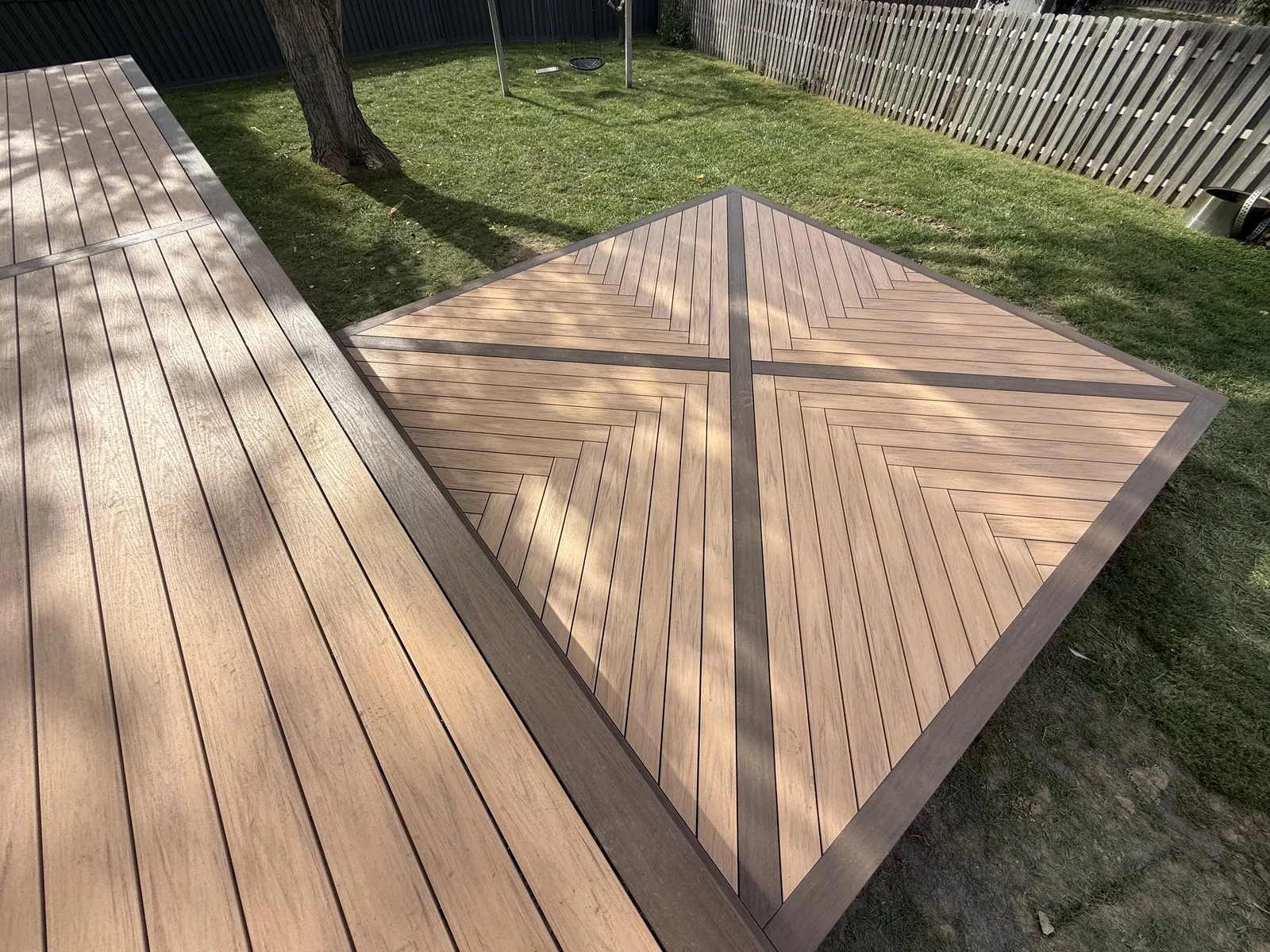
Overhead view of diagonal decking and a picture-frame border.
Wolf PVC First, With Clear Material Guidance
Our primary recommendation is Wolf Serenity cellular PVC. We compare it with composite and wood based on real material differences.
Wolf Serenity Cellular PVC
Wolf Serenity uses High-Density Cellular technology and contains no wood fiber. It is designed for moisture repellency, low maintenance, and a natural wood-look texture with color variation.
Primary low-maintenance decking recommendationCOLORWATCH100 ASA Capstock
Wolf's surface technology is designed for color retention. Current Serenity products carry a 50-year stain and fade warranty, subject to the manufacturer's written terms.
Review current warranty coverage and exclusions before purchaseWood-Plastic Composite
Composite combines wood fiber and plastic. It can provide a low-maintenance wood look, but it is not the same material as cellular PVC. Product composition, installation instructions, and warranty terms vary.
Compare the exact product, not just the category nameNatural Wood
Cedar and treated wood offer authentic grain and a familiar feel. They require recurring care to maintain appearance and manage weathering, making upkeep an important part of the decision.
Best for homeowners who value natural material characterOutdoor Dining Deck with Wide-Top Railings
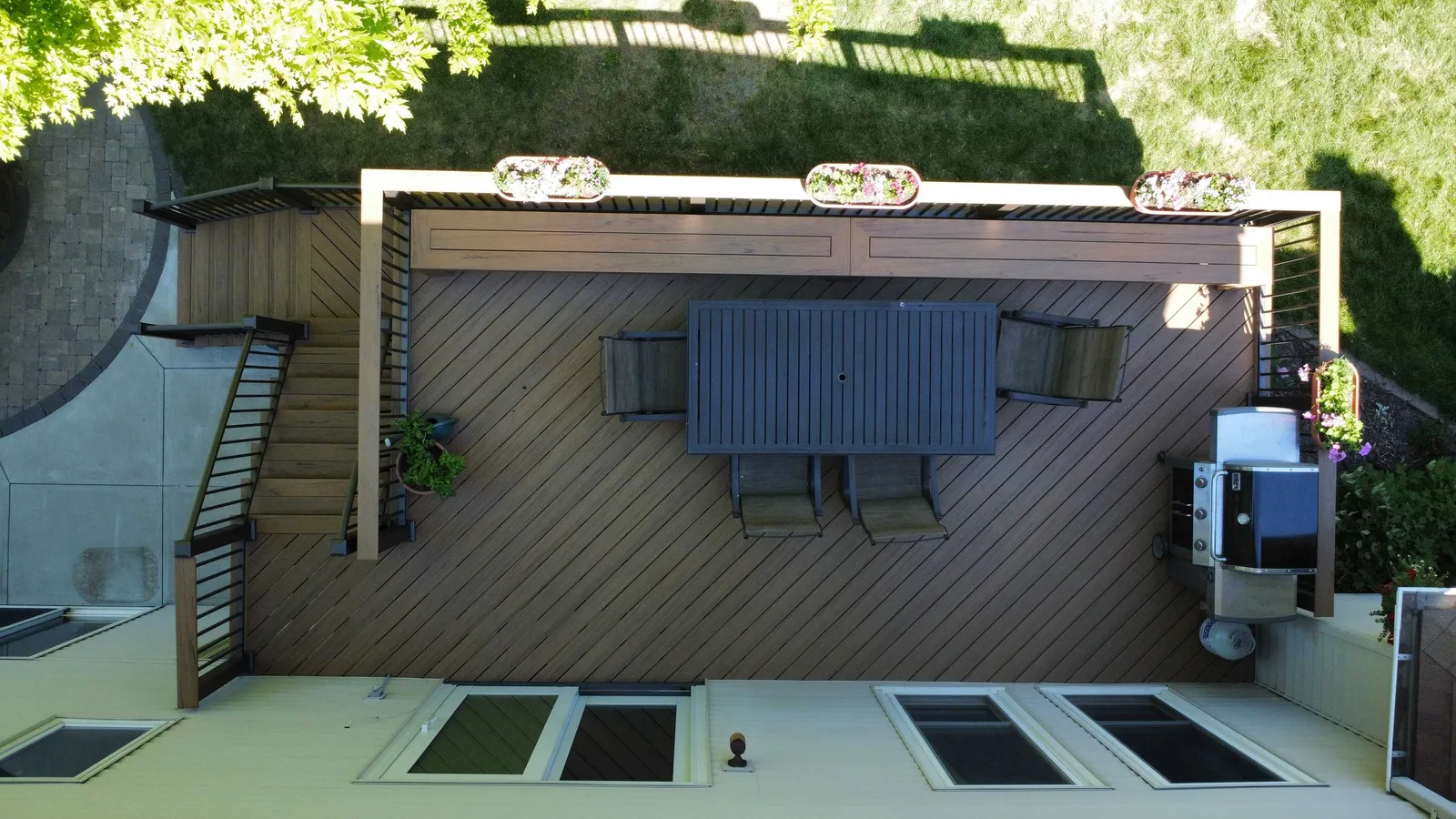
Dining table, wide-top railing, and flower boxes on a finished deck.
How Composite Handles Omaha Weather
Nebraska puts decks through a lot: ice and snow, big temperature swings, and strong summer sun. Here's how composite holds up, and what we do during the build to help.
Freeze-thaw cycles
Wood soaks up water, freezes, and cracks. Capped composite and PVC boards resist moisture far better than wood, so they don't check, split, or splinter the way wood does after a few Nebraska winters.
Temperature swings
Composite and PVC boards expand and contract with temperature. Each manufacturer publishes gapping rules based on the temperature on installation day, and we follow them, so boards don't buckle in July or open up wide gaps in January.
Summer sun
Any decking warms in direct sun, and color and exposure affect surface temperature. We help you view samples at your home without making an unverified heat guarantee.
Snow and ice
Winter-care products and tools are material-specific. Follow the current care instructions for the exact boards installed rather than assuming a method approved for another product is safe.
Composite vs. Wood for an Omaha Deck
| Feature | Composite and PVC | Cedar | Pressure-treated wood |
|---|---|---|---|
| Upkeep | Wash once or twice a year | Clean and seal every 1 to 2 years | Clean and seal every 2 to 3 years |
| Splinters | None | Can splinter as it ages | Can splinter and check |
| Color | Holds its color, backed by fade and stain warranties | Weathers to gray without sealer | Weathers to gray without sealer |
| Freeze-thaw | Resists moisture, cracking, and rot | Naturally rot-resistant, but needs sealing | Cracks and warps faster when not sealed |
| Look and feel | Wood-grain patterns in dozens of colors | Real wood warmth and aroma | Real wood, usually stained |
Prefer real wood? We build beautiful cedar decks too. See our cedar decks. Still deciding? That's exactly what the design consultation is for.
What Goes Into a Composite Deck That Lasts
Composite boards can outlast the framing underneath them if the build isn't done right. These are the details that separate a great composite deck from a good one.
- Framing planned for the product. Joist layout and support are checked against the selected manufacturer's current instructions and the approved project plan.
- Joist tape on the framing. A protective tape on top of the joists helps keep water out of the wood you'll never see again.
- Footings below the frost line. Omaha requires footings for attached decks to reach 42 inches below grade, so frost can't heave your deck.
- A flashed, properly fastened ledger. The ledger is where your deck meets your house. We flash it to keep water off your home's rim joist, fasten it to code, and never attach it through brick veneer.
- Hidden fasteners. Clip systems made for each brand hold the boards from the side, so the surface stays clean with no screw heads.
- Correct gapping and airflow. End and side gaps set for the install-day temperature, plus the airflow and drainage underneath that each manufacturer requires.
- Picture-frame borders and breaker boards. A border hides board ends around the edge, and a breaker board eliminates long seams for a cleaner, custom look.
- Railings to code. Guards at least 36 inches tall on decks more than 30 inches above the ground, with openings small enough that a 4-inch sphere can't pass through.
Following each manufacturer's installation guide isn't optional for us. It's how your deck performs the way it should, and it's how your product warranty stays protected.
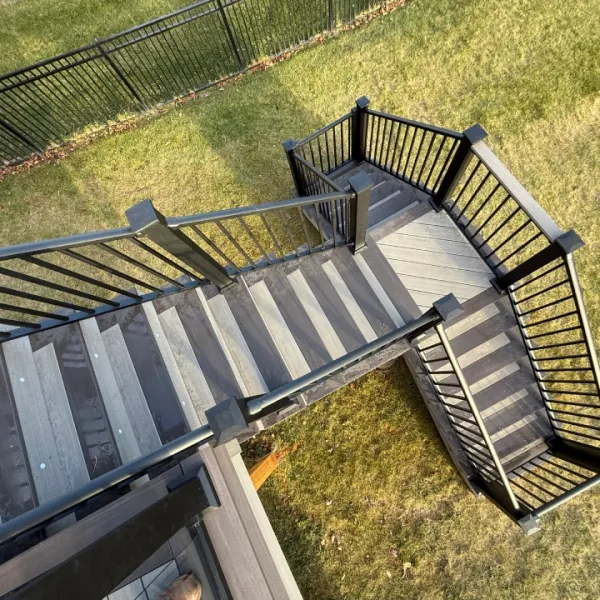
Design Options for Your Composite Deck
Composite gives you far more design freedom than most people expect.
- Colors and grain: from light, weathered grays to deep tropical browns, with streaked patterns that read like real wood
- Board patterns: picture-frame borders, contrasting inlays, and diagonal or herringbone layouts (we plan the framing for them)
- Multi-level and wraparound layouts: tiers that step down to the yard or wrap around the house
- Railings: black aluminum, cable, glass panel, or matching composite, with optional drink rails
- Lighting: post-cap lights, stair riser lights, and under-rail lighting for safer, better-looking evenings
- Built-ins and extras: benches, planter boxes, pergolas, privacy screens, and under-deck drainage to keep the space below dry
Deck Board and Railing Details
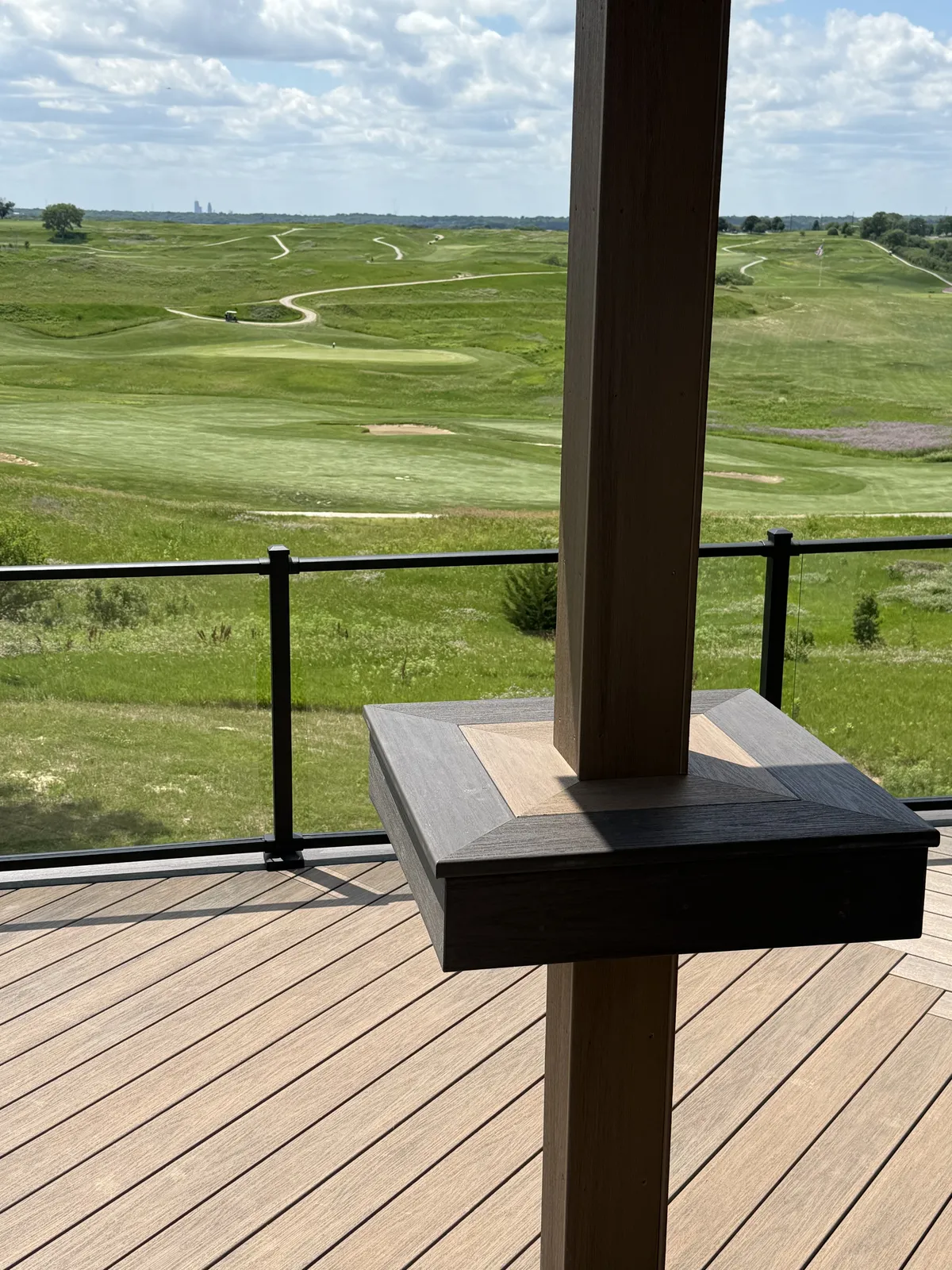
Deck board and railing details overlooking an open landscape.
Composite Deck Projects Around Omaha
A few composite decks we've built across the metro. See more in our project gallery.


We received exceptional service from Big Pine Decks! They designed and built a beautiful composite deck for our new home. The quality of work is outstanding and they finished ahead of schedule. Very communicative and trustworthy.
Danica B.

How We Build Your Composite Deck
- Design consultation. We visit your home, talk through how you'll use the space, take measurements, and bring board samples from the brands we install.
- Your plan in writing. You get a clear, written plan covering layout, materials, colors, railings, and lighting.
- Permits and scheduling. We prepare the paperwork, pull the permit, and schedule the footing, framing, and final inspections.
- The build. Most standard decks take 3 to 7 working days once construction starts.
- Walkthrough and care. We walk the finished deck with you and go over how to care for your brand of decking.
Caring for Your Composite Deck
Composite is low maintenance, not no maintenance. A few simple habits keep it looking new:
- Wash it once or twice a year with warm water, a mild soap, and a soft brush. A garden hose is all you need to rinse. If you use a pressure washer, stay within your brand's limits.
- Sweep off leaves, pollen, and debris, especially in spring and fall, so nothing sits and stains.
- Check the installed product's current care guide before using mats, cleaners, powered equipment, or accessories.
- Put a grill mat under your grill to catch grease.
- For snow and ice, follow the current care guidance for the exact Wolf PVC or composite product installed.
Composite Decks Across the Omaha Metro
We're based in Bellevue and build composite decks throughout the metro, including Omaha, Papillion, La Vista, Gretna, Elkhorn, Millard, Springfield, Bennington, Valley, Fremont, Plattsmouth, Waterloo, and Council Bluffs, Iowa.
Composite Deck FAQs
What is the best composite decking for Nebraska winters?
The best fit depends on maintenance goals, appearance, budget, and site conditions. Wolf Serenity is cellular PVC with no wood fiber and is designed for moisture repellency. Wood-plastic composite is a different material. We help homeowners compare real samples and manufacturer information.
What is the difference between composite and Wolf PVC decking?
Wood-plastic composite combines wood fiber and plastic. Wolf Serenity uses high-density cellular PVC and contains no wood fiber. Both are low-maintenance alternatives to wood, but their composition, feel, moisture behavior, and installation instructions differ.
How long does a composite deck last?
Service life varies with product, exposure, installation, and care. Wolf lists a 50-year stain and fade warranty and a separate limited lifetime warranty for Serenity decking, subject to the manufacturer's current written terms.
Does composite decking get hot in the sun?
All decking can warm in direct sun. Color, exposure, airflow, and weather affect surface temperature, so we recommend viewing samples at your home rather than relying on a heat guarantee.
Can you put composite decking on my existing deck frame?
Often, yes, if the frame is sound and its layout is compatible with the selected product's current installation instructions. We inspect the framing first. Learn more about deck repair and resurfacing.
How do I remove snow and ice from a composite deck?
Follow the current care instructions from the manufacturer of your installed boards. Do not assume that a tool or ice product approved for one material is approved for another.
Does composite decking need to be stained or sealed?
No. Capped composite and PVC boards never need staining, sealing, or painting. A wash once or twice a year keeps them looking their best.
Do I need a permit for a new composite deck in Omaha?
Yes. The City of Omaha requires a building permit for new decks and deck replacements, with footing, framing, and final inspections. Bellevue, Papillion, La Vista, and Council Bluffs have their own permit offices. We pull the permit for you wherever you live.
How long does it take to build a composite deck?
Most standard decks take 3 to 7 working days once construction starts. Multi-level decks, roofs, or large hardscaping projects can take several weeks.
See Composite Samples in Person
Book a free design consultation with a family-owned Bellevue builder, recognized as a 2026/2027 Best of Bellevue winner and accredited by the BBB. We'll bring the samples, measure your space, and put your plan in writing.
 2026/2027 Best of Bellevue
Licensed and insured
Permits handled