
Deck Repair & Resurfacing in Omaha, NE
Not every tired deck needs to be torn out. If the frame underneath is solid, we can replace what's failing, bring railings and stairs up to today's safety standards, or resurface the whole deck with new composite or cedar boards without tearing out the structure. If the structure isn't safe, we'll tell you that too.
Big Pine Decks is a family-owned deck builder based in Bellevue, repairing and resurfacing decks for homeowners across Omaha, Papillion, La Vista, Gretna, and western Iowa.
Most decks can be repaired if the framing, ledger, and footings are still sound. Replacing damaged boards, re-securing railings, rebuilding stairs, and resurfacing with new composite boards can add years of safe use without a full tear-out. If the structure is failing, we'll show you what we found and recommend a rebuild instead.
Raised Deck with Dark Railing and Stairs
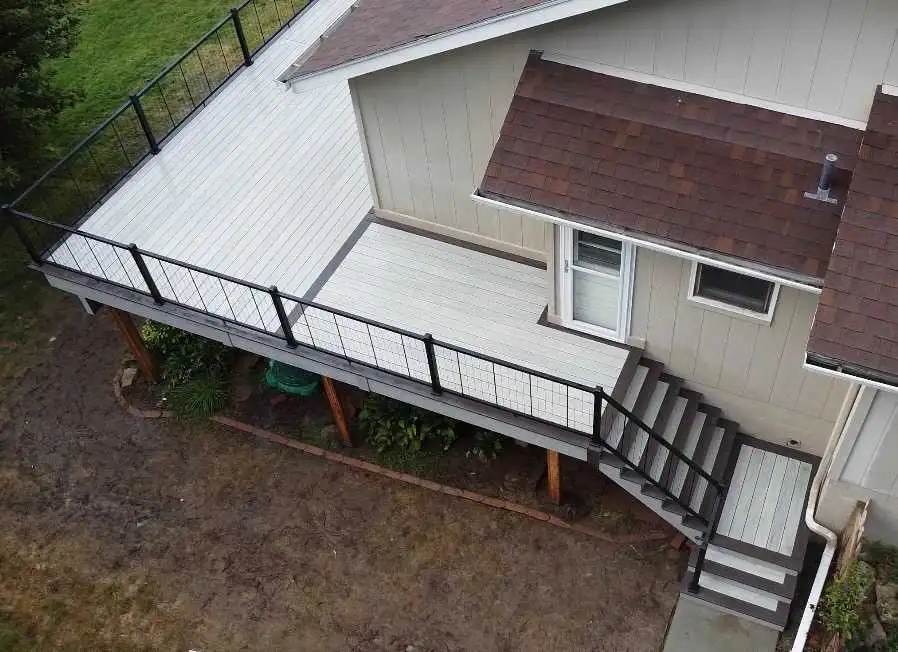
Raised deck with dark railing and stairs to the yard.
Signs Your Deck Needs Repair
Walk your deck after the snow melts and again before summer. Call us if you notice any of these:
Soft or spongy boards
Press a screwdriver into suspect spots, especially near the house, under planters, and at board ends. If it sinks in easily, rot has started.
Railings that move
A guard shouldn't flex or rock when you lean on it. A loose railing is a serious fall risk, especially on a raised deck.
Rusted hardware
Orange streaks, flaking joist hangers, or nails that have backed out mean the connections holding your deck together are weakening.
Bounce or sway
A deck that shakes when people walk across it may have undersized joists, missing bracing, or failing posts.
Leaning posts or heaved footings
Footings that weren't dug below the frost line can lift and shift after a Nebraska winter, pulling the deck out of level.
Trouble where the deck meets the house
Water stains, rot, or a gap at the ledger board are red flags. This is the most critical connection on any attached deck.
Cracked, split, or cupped boards
Surface damage lets water into the wood and speeds up rot in the framing underneath.
Wobbly or rotting stairs
Stair stringers sit close to the ground and often rot first. Loose treads and missing handrails are easy trip hazards.
If your deck is sagging, pulling away from the house, or a railing gives way, stop using it and call us at 402-212-6948.
Why Omaha Decks Break Down
Nebraska is hard on decks. Water soaks into wood, freezes, and expands over and over through the winter, opening cracks and loosening fasteners a little more each season.
Footings are the next weak spot. Omaha requires footings for attached decks to reach 42 inches below grade. Older or do-it-yourself decks built on shallow footings or deck blocks can heave with the frost and pull the whole structure out of line.
Then there's the ledger, the board that fastens your deck to the house. The North American Deck and Railing Association estimates that about 90 percent of deck collapses start with a failed ledger connection, usually because of missing flashing, rot, or the wrong fasteners.
Age matters too. Decks built before 2004 were usually framed with an older type of treated lumber. The preservatives in today's treated lumber can corrode ordinary steel hardware, so repairs need connectors and fasteners rated for modern treated wood. Reusing old hardware on new lumber is a shortcut to avoid.
What Can Be Repaired vs. Replaced
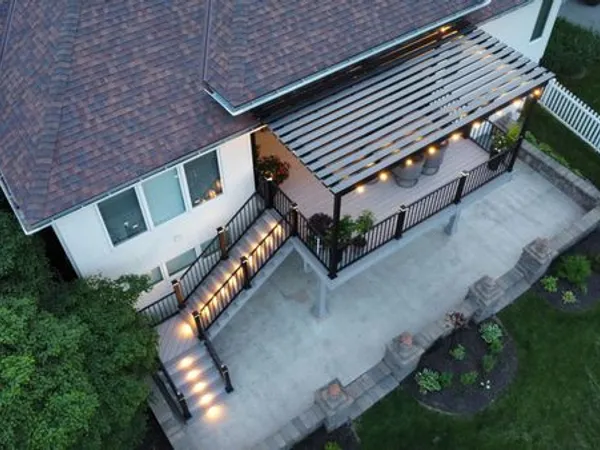
Railings
Railings are the most common safety hazard on older decks. Wood posts rot, connections loosen, and balusters fail. We often replace old wood guards with low-maintenance aluminum or composite railing systems that meet current building codes. A secure guard must be at least 36 inches tall and able to handle a 200-pound load in any direction.
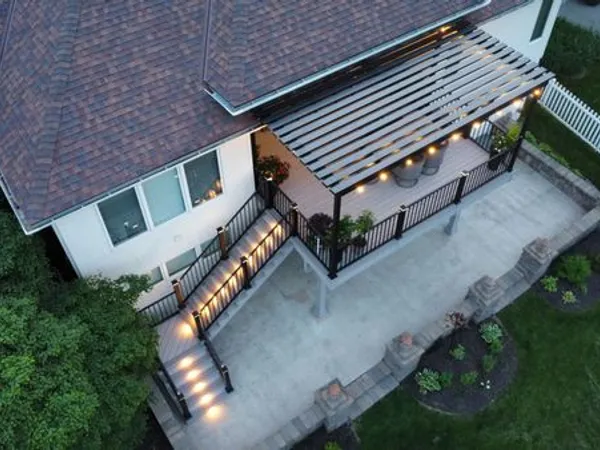
Stairs
Stairs take a beating from foot traffic and ground moisture. We regularly rebuild failing stairs from the ground up, cutting new stringers, pouring concrete landing pads, and installing strong, continuous handrails.
Framing
If a joist is soft or a hanger is rusted, we can often replace or sister the joist without tearing down the deck. But if the rot has spread through the main beam, the posts, or the ledger, it's usually safer and smarter to rebuild.
What Deck Resurfacing Includes
Resurfacing is the smart move for a deck that's structurally sound but worn out on top. Here's what the work includes:
- Tear-off. We remove the old decking, railings, and trim, and haul everything away.
- Frame inspection. With the boards off, we check every joist, beam, post, and the ledger for rot, cracks, and loose connections.
- Framing repairs. We replace or sister weak joists and add blocking as needed. When Wolf Serenity PVC is selected, we evaluate board support against current code and Wolf's current installation instructions before making any required framing modifications.
- Protection. Joist tape goes on top of the framing, and we confirm the ledger is flashed and fastened correctly.
- New surface. We install your new composite or cedar boards with the manufacturer's recommended fasteners, plus fascia, trim, and any border details.
- Railings and stairs. Keep them, repair them, or upgrade them to match.
- Walkthrough. We clean up, walk the finished deck with you, and answer your questions about care.
Most resurfacing projects take 2 to 5 working days once materials arrive.
Do You Need a Permit to Repair a Deck in Omaha?
Yes, usually. The City of Omaha requires a building permit if the repair involves structural components. That includes:
- Replacing or adding joists, beams, posts, or footings
- Replacing the ledger board
- Replacing handrails and guardrails
Replacing only the deck boards usually does not require a permit. But since a full resurfacing often includes repairing joists and upgrading railings, a permit is usually required. Papillion, Bellevue, La Vista, and Council Bluffs have similar rules. If your repair needs a permit, we handle the paperwork and schedule the city inspections.
Our Repair Assessment Process
- On-site inspection. We examine the boards, framing, ledger, stairs, footings, and takes photos of what we find.
- Honest recommendation. You get a clear recommendation to repair, resurface, or replace, with photos and a written scope so you know exactly what's included.
- Permit and scheduling. If your repair needs a permit, we handle it and put your project on the calendar.
- Repair, cleanup, and walkthrough. We fix it right, haul away the debris, and walk the finished deck with you.
Deck Repair Across the Omaha Metro
We're based in Bellevue and repair decks throughout the metro, including Omaha, Papillion, La Vista, Gretna, Elkhorn, Millard, Springfield, Bennington, Valley, Fremont, Plattsmouth, Waterloo, and Council Bluffs, Iowa.
Deck Repair FAQs
What are the most common deck repairs?
Loose or rotted railings, soft boards near the house, rotted stair stringers, rusted joist hangers and fasteners, and posts or footings that shifted after winter. Ledger problems are less common but the most serious, so we check the ledger on every assessment.
Should I repair or replace my deck?
Repair or resurface if the frame, ledger, and footings are sound. Replace if you find widespread rot, heaved or shallow footings, or a frame near the end of its life. We'll show you what we find and walk you through both options when it's close.
Can you put composite decking on my existing frame?
Often, yes. After the old boards come off, we inspect and repair the framing, add joist tape, and add joists if the new boards need closer spacing. If the frame won't last as long as the composite, we'll tell you before you commit.
Do I need a permit to repair my deck in Omaha?
If the repair involves handrails, guardrails, joists, beams, posts, or footings, the City of Omaha requires a permit. Replacing only the deck boards usually doesn't. We check the rules for your city and pull any permit you need.
How long does deck repair take?
Many repairs take one or two days. Most resurfacing projects take 2 to 5 working days once materials arrive, and larger structural repairs can take longer when a permit and inspections are involved.
Can you repair a deck in the winter?
Yes. We work through most of the year. Frozen ground can delay new footings, but board, railing, and stair repairs can often go ahead in colder weather.
How often should I have my deck inspected?
The North American Deck and Railing Association recommends an inspection every year. Spring is a smart time in Omaha, right after freeze-thaw season, and May is Deck Safety Month.
Do you repair decks you didn't build?
Yes. We repair and resurface decks no matter who built them, including older wood decks and composite decks.
Get Your Deck Safe and Looking New Again
Schedule a deck assessment or call 402-212-6948. We'll give you an honest answer on repair versus replacement and put the plan in writing.
 2026/2027 Best of Bellevue
Licensed and insured
Permits handled